Innovative Application of FineJoin RFID Technology in Fiber Optic Digital Transformation
I. Core Pain Points in Fiber Optic Management
Currently, fiber optic network management mainly relies on manual records, paper ledgers, or basic electronic systems. Against the backdrop of expanding resource scale and increasing operation and maintenance frequency, many efficiency and safety issues have emerged, which can be summarized into three categories:
1. Low manual operation efficiency and high error rate
Patch cord management dilemma: In data centers or equipment rooms, a single cabinet may connect dozens or even hundreds of fiber optic patch cords. Manual insertion and removal require checking labels one by one, and a single operation can take 5-10 minutes. If labels are worn or fall off, problems such as misinsertion or missing insertion can occur, leading to business interruptions. Troubleshooting requires backtracking the entire link, usually taking more than 1 hour.
Ledger update lag: Operations such as adding, changing, or removing fiber optic resources require manual entry into the system, causing an asynchronous "operation-record" issue. The accuracy rate of ledgers in some equipment rooms is less than 70%, laying hidden dangers for subsequent maintenance.
2. Uncontrolled management of dumb resources, serious resource waste
Opaque status: Dumb resources such as idle fiber optics and cables in telecommunications networks lack real-time sensing methods. Maintenance personnel cannot quickly determine whether a fiber is in "active use," "standby idle," or "fault out of service" status, leading to low resource reuse rates. New deployments may duplicate laying, causing cost waste.
Inventory difficulty: Traditional dumb resource inventory requires manual section-by-section inspection and recording. Covering a medium-sized equipment room takes 2-3 person-days, and it is difficult to accurately count key information such as resource location, length, and service life, resulting in a resource idle rate as high as 20%-30%.
3. Long fault troubleshooting cycles, high risk of business loss
Difficult link localization: When a fiber optic fault occurs, it requires section-by-section testing using equipment such as optical power meters and OTDR, combined with manual ledger tracing. The average fault location time exceeds 4 hours. If core business is involved, each hour of interruption can cause losses of tens of thousands of RMB.
Lack of full lifecycle traceability: The full process data of fiber optics from procurement, deployment to disposal is scattered across different systems, making it impossible to form a complete traceability chain, difficult to analyze the root cause of faults, and not conducive to preventing similar problems.
II. RFID Technology Solution: Targeted Solution to Management Problems
Based on the pain points of fiber optic management, RFID technology uses a three-layer architecture of "tag + reader + management system" to achieve automatic identification, real-time tracking, and intelligent management of fiber optic resources, focusing on solving two core needs: "patch cord tracking" and "dumb resource transformation."
1. Data center patch cord tracking: Full-process automated management
To address the problems of frequent patch cord insertion/removal and ledger update lag in data centers, the RFID solution achieves "zero error, second-level response" for patch cord operations through "tag attachment + real-time reading + system linkage." The specific process is as follows:
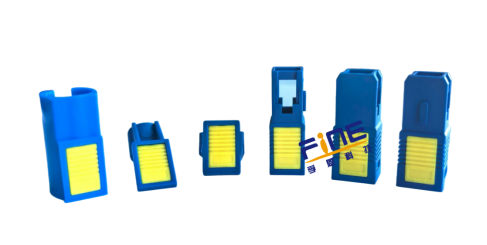
Tag selection: Use UHF fiber optic tags that clip onto the connectors (e.g., SC, LC connectors) or cable surfaces at both ends of the fiber patch cord. The tags can withstand a temperature range of -40°C to 85°C, are waterproof and wear-resistant, and have a service life consistent with the fiber (over 10 years). The tag has a built-in unique ID that associates information such as the patch cord's specifications, belonging link, and business.
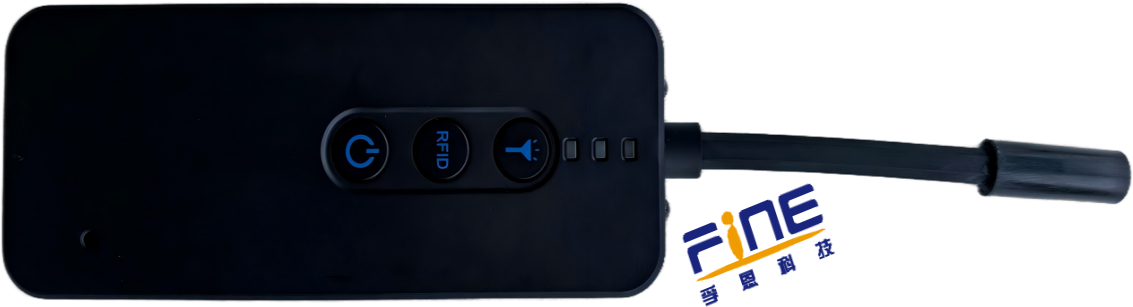
Reader identification: Maintenance personnel use RFID handheld terminals for search and inspection operations, uploading operation records in real time. The system can search by time, business type, operator, and other dimensions. When a fault occurs, it can quickly trace back whether recent patch cord changes caused the problem, improving positioning efficiency by over 90%.
2. Digital and intelligent transformation of dumb resources: Activate the value of idle resources
To address the problems of "unclear status and difficult inventory" of dumb resources such as fiber optics and cables, the RFID solution achieves visual management and efficient reuse of dumb resources through "tag empowerment + batch identification + status analysis."
(1) Tag empowerment: Turn "dumb resources" into "smart resources"
Fiber optic tag deployment: Install RFID tags at the starting end and intermediate nodes (e.g., splice closures, patch panels) of each fiber segment. The tag records the fiber's ID and associates basic information such as laying location, laying time, initial attenuation value, and belonging area. For multi-core fibers, sub-IDs can be assigned by core to achieve single-core management.
(2) Core functions: Automatic identification and resource revitalization
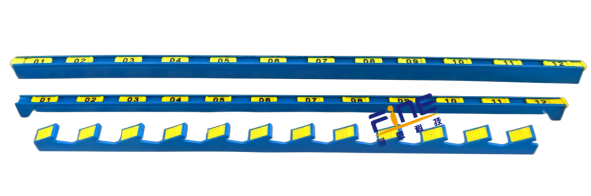
Automatic status differentiation: Each port is assigned an ID, and ports and pigtails are bound one-to-one with RFID tags to prevent misinsertion or missing insertion.
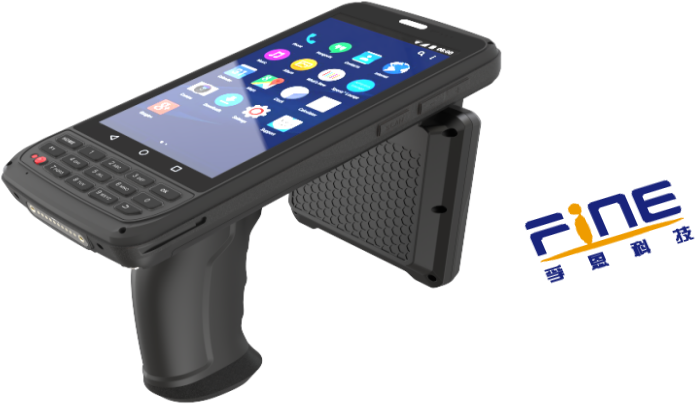
Quick inventory and statistics: Maintenance personnel use RFID handheld devices to inventory resources in a certain area. One hour can complete the workload that traditionally takes 3 person-days, with an inventory accuracy rate of over 99.5%. The system automatically generates resource reports, clearly displaying the quantity, location, and reusable scenarios of idle resources, providing data support for resource scheduling.
Revitalization of idle resources: When a new business is needed, the system first recommends matching idle resources and plans the optimal laying path, avoiding duplicate procurement and construction. According to a case of a telecommunications operator, after the transformation, the reuse rate of dumb resources increased by 35%, reducing annual new fiber procurement costs by over 2 million RMB.
III. Economic Benefits of RFID Application: Cost Reduction, Efficiency Improvement, and Value Addition
1. Direct cost reduction: Reduce resource waste and duplicate investment
Cost savings from dumb resource reuse: By revitalizing idle fibers and cables, reduce new resource procurement. Based on a medium-sized data center with 1,000 idle fibers, the average procurement and laying cost per fiber is about 500 RMB, saving 500,000 RMB in procurement costs annually. If promoted across the entire telecommunications operator network, annual cost savings could reach tens of millions of RMB.
Labor cost optimization: Traditional patch cord operations handle 20 cords per person per day, while the RFID solution handles 80 cords per person per day, improving efficiency by 300% and reducing O&M manpower by 60%. Based on an annual salary of 100,000 RMB per person, a 10-person O&M team can save 600,000 RMB in labor costs annually.
Fault loss reduction: Fault troubleshooting time is reduced from an average of 4 hours to 0.5 hours. Based on a loss of 50,000 RMB per hour for core business interruption, a single fault loss drops from 200,000 RMB to 25,000 RMB. Annual fault loss reduction exceeds 1 million RMB (estimated based on 10 faults per year).
2. O&M efficiency improvement: Shorten operation cycles and management costs
Patch cord operation efficiency improvement: Single patch cord insertion/removal time is reduced from 10 minutes to 2 minutes, and the operation error rate drops from 15% to below 0.5%, avoiding business interruptions caused by misinsertion. Based on 100 patch cord operations per day, annual operation time saved is approximately 5,800 hours, equivalent to 725 working days.
Exponential inventory efficiency improvement: Equipment room resource inventory time is reduced from 3 days to 2 hours, saving approximately 1,000 inventory hours per year, while avoiding manual inventory omissions and errors, reducing ledger maintenance costs.
3. Business value addition: Support rapid business expansion and risk control
Faster business deployment: When adding new business, through rapid scheduling of idle resources and automated link configuration, the business go-live time is shortened from the traditional 7 days to 1 day, improving market response speed and helping enterprises seize business opportunities.
Enhanced risk control capability: Through full lifecycle traceability, the root cause of faults can be quickly located, reducing the recurrence rate of similar faults. At the same time, tag information is tamper-proof (can be combined with blockchain technology), avoiding management risks caused by manual ledger tampering, ensuring network security operation.
IV. Recommended RFID Hardware Products
1. FineJoin RFID Inventory Handheld
2. FineJoin RFID Search Handheld Scanner
3. FineJoin RFID Fiber Optic Tag
4. FineJoin RFID Port Tag