Industry Applications
Deep into eight industry scenarios, providing end-to-end RFID solutions
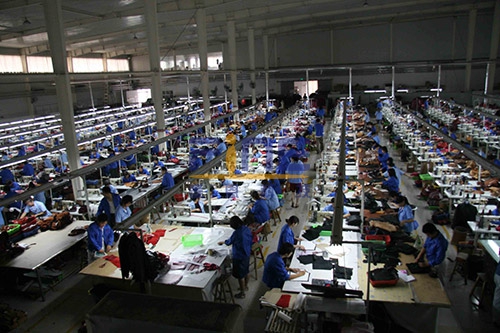
RFID Application in Garment Production Line
China is both a major consumer and producer of garments. With the rapid development of China's economy, high integration with the international market, improvement of people's living standards, and strong support from government policies, the garment industry has been developing rapidly and steadily.
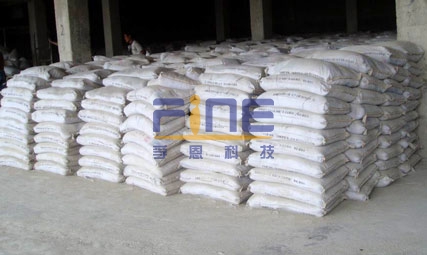
Solution for Cement Outbound and Transport Product Safety Based on RFID Technology
I. Background With the progress of society, building materials have evolved from primitive stone and wood to new composite materials, cement, steel, lime powder, etc. These raw materials play a huge role in various demand applications, from small step platforms to large skyscrapers... The competition in building materials and other industries is also becoming increasingly fierce. Some unscrupulous merchants counterfeit and pass off inferior products as high-quality ones with strong performance in quality, brand, and performance, causing not only safety hazards for users but also irreparable impact and loss to the manufacturer's product quality reputation. To...
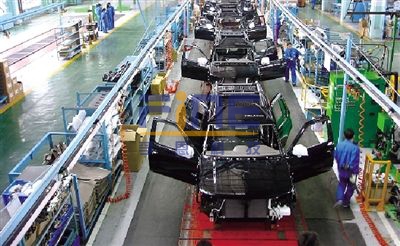
RFID-Based Solutions for the Automotive Manufacturing Industry
Currently, the level of informatization in the automotive industry varies widely - some companies are highly digitalized, while others are just starting out or still rely on fully manual recording. However, all enterprises hope to establish identification systems to elevate their management to a certain level, improve the efficiency of the entire logistics chain, and reduce error rates.
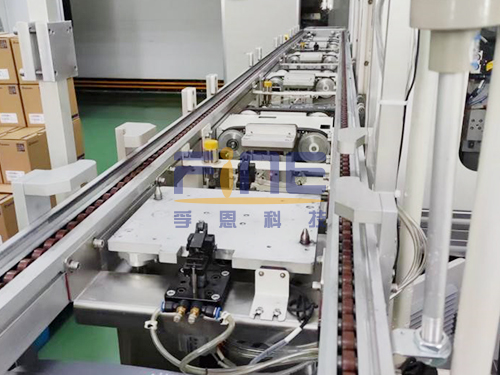
2022 RFID Success Case for Non-standard Automated Production Inspection Line
Currently, the automation level of manufacturing industry is gradually improving, and the degree of centralized control is becoming more intensive. As management, it is necessary to understand the production operation status in real time. Traditional human-based control systems struggle to complete tedious tasks. Data collection centered on RFID technology provides convenience for manufacturers, enabling accurate recording of inspection process information and process operation information. It realizes automated monitoring during production inspection, improves inspection efficiency, reduces errors, optimizes asset utilization, improves production methods, and effectively saves production costs.
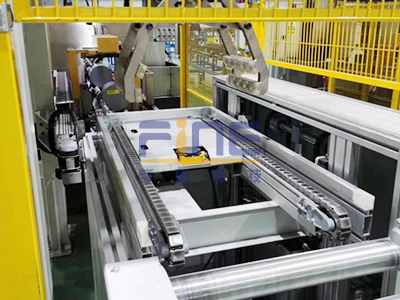
Successful Case of RFID Production Process Management in a Photovoltaic Crystal Pulling Plant
With the global energy shortage and climate warming, clean energy has become a major development goal for domestic energy. The photovoltaic industry, as a key part of clean energy, has become a strategic emerging industry in China after more than a decade of development. In the context of intelligent manufacturing, integrating new technologies, controlling production, improving efficiency, and reducing costs are important means for the photovoltaic industry to maintain its competitiveness.

Leading the New Era of Intelligent Traceability in Photovoltaic Crystal Pulling Plants
With the global focus on environmental protection and sustainable development, the photovoltaic industry has encountered unprecedented growth opportunities. As a core link in the photovoltaic industry chain, the production efficiency and product quality of crystal pulling plants directly impact the competitiveness of the entire PV sector. Shanghai FineJoin Smart Technology Co., Ltd. (hereinafter referred to as FineJoin) leverages its advanced RFID technology to build a comprehensive full-process traceability application solution for photovoltaic crystal pulling plants, leading the industry toward intelligence and efficiency. Pain Points and Challenges in Crystal Pulling Plants The production process in photovoltaic crystal pulling plants is complex and precise, from silicon material cleaning and feeding to crystal pulling and machining

How RFID Tracking Rewrites the Destiny of Photovoltaic Wafer Slicing Factories
Driven by global environmental demands, China's photovoltaic industry has rapidly developed and become the world's largest solar cell producer. The industrial chain covers core segments such as silicon materials, wafers, cells, and modules, with competition centered on scaling and cost control. However, with surging capacity, quality management weaknesses emerge: production data relies on manual recording, causing delays and errors; traditional barcodes fail in harsh environments like oil and high temperatures, hindering quality traceability; lack of manufacturing databases impedes quality supervision and process optimization. Moreover, PV products are complex and export-oriented, with strict international traceability requirements, forcing companies to accelerate automation and full-process IT integration to build transparent, traceable digital systems for quality improvement, cost optimization, and enhanced global competitiveness.

RFID Technology and Photovoltaic Cells: Building a Smart Traceability Future
1. Project Background: The Traceability Dilemma of the Photovoltaic Industry. With the continuous growth of market demand for photovoltaics, the scale of cell production is expanding. Under traditional production models, photovoltaic cells go through multiple complex processes such as texturing, diffusion, laser SE, etching, etc. from raw material input to finished product output. Work-in-progress is loaded in plastic basket carriers and transported by AGV or manually. Due to the large number of processes and complex flow, traditional manual recording or barcode identification methods cannot achieve efficient and accurate production information collection and full-process quality traceability. This not only leads to low production efficiency but also makes it difficult to trace product quality issues. Once a problem occurs, it is difficult to quickly locate the root cause, causing economic losses to the enterprise and affecting brand reputation.
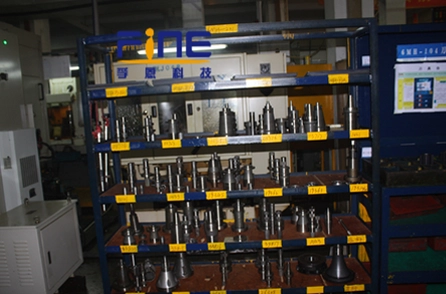
Solving Tool Management Challenges: RFID Technology Innovation, FineJoin Co., Ltd. as a Reliable Partner
In modern industrial manufacturing, the rapid development of CNC technology is reshaping production landscapes at an unprecedented pace. Equipment updates are accelerating, and the variety of processed parts is continuously expanding and becoming more refined. All of this drives an explosive growth in the demand for tools — the quantity and variety of tools increase sharply, while the flow and exchange of tools between warehouses, machine tools, and different equipment become more frequent.
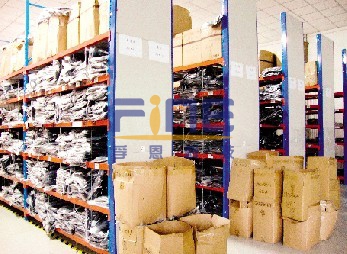
Garment Logistics and Retail Management System Solution Based on RFID Technology
This solution is customized by Shanghai FineJoin through analyzing the enterprise's needs. It integrates RFID technology, network technology, computer technology, database technology, and wireless communication technology. Combining the company's actual requirements and FineJoin's extensive experience and unique technical expertise, we propose the following formal RFID logistics retail management system solution.
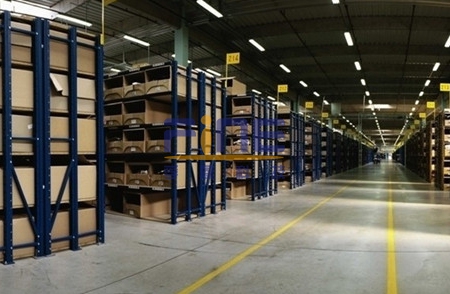
RFID-based Warehouse Logistics Management System Solution
I. Project Background Logistics involves the effective flow of raw materials and finished products from origin to destination. Modern logistics integrates transportation, warehousing, loading/unloading, processing, sorting, distribution, and information into a complete supply chain through "planning, implementation, and control of multiple elements in the entire logistics process." Internationally, logistics is widely regarded as "the last frontier for cost reduction" and "the third source of profit." With the acceleration of economic globalization and informatization, the logistics industry is undergoing a "modern logistics revolution." After China's accession to the WTO, enterprises need to adopt advanced logistics management concepts and technologies to enhance core competitiveness. However, due to the influence of the planned economy system and the constraints of economic development level, domestic modern logistics practices still lag behind developed countries. In recent years, some enterprises with higher management levels have taken modern logistics as a "new profit growth point," optimizing internal organization and logistics resources.
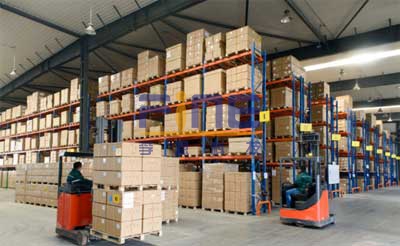
Application Solution for Warehouse Logistics Management System Based on RFID Technology
Currently, market competition is increasingly fierce. Improving production efficiency and reducing operating costs are crucial for enterprises. Warehouse logistics management is widely used in various industries. Designing and establishing a complete set of warehouse management processes, improving warehouse turnover efficiency, reducing the occupation of operating funds, turning frozen assets into cash, and reducing costs caused by warehouse obsolescence are important aspects for enterprises to improve production efficiency.
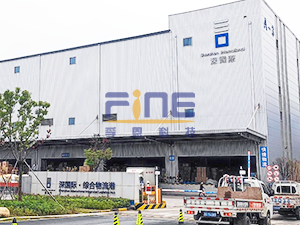
FineJoin RFID Forklift Retrofit Project Successfully Implemented at Shenzhen International Comprehensive Logistics Port
With social progress and scientific and technological development, logistics equipment plays an increasingly prominent role in economic development, and the penetration rate of forklifts is also increasing. Forklifts play a very important role in a company's logistics system and are the mainstay of material handling equipment. I. Case Background Forklifts, as trackless, wheeled loading, unloading, and handling vehicles, are widely used in factories, mines, warehouses, stations, ports, airports, freight yards, distribution centers, and other places. They can enter ship holds, train cars, and containers for loading, unloading, stacking, destacking, and short-distance handling operations. The important position of forklifts in logistics warehousing and the need for intelligent...

Optimize Automotive Warehouse Logistics Management
With the rapid development of the automotive manufacturing industry, the supply chain management of parts has become increasingly complex, involving multiple links and multiple participants. To ensure the quality, traceability, and logistics efficiency of parts, traditional logistics management methods can no longer meet the needs of modern automotive manufacturing. Therefore, introducing RFID technology has become an effective solution. Logistics traceability diagram https://pmtdb1c40-pic17.websiteonline.cn/upload/zk2k.png During the logistics traceability of automotive parts, multiple
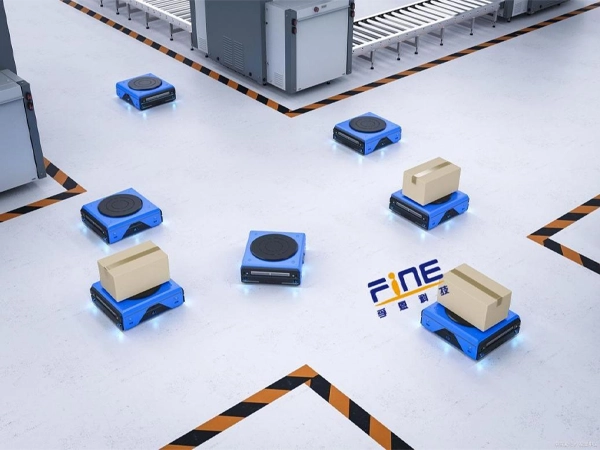
AGV/RGV Upgrade with Smart Brain! FineJoin RFID Doubles Logistics Production Efficiency
AGV/RGV Upgrade with Smart Brain! FineJoin RFID Doubles Logistics Production Efficiency. Definition: AGV stands for Automated Guided Vehicle, equipped with electromagnetic or optical automatic guidance devices, capable of traveling along prescribed paths with safety protection and various transfer functions. AGV paths can be flexibly changed based on warehouse storage requirements and production processes, suitable for e-commerce warehousing and manufacturing scenarios. https://pmtdb1c40-pic17.websiteonline.cn/upload/m8g3.png

FineJoin RFID Builds a Smart Book Academy with Online Popularity
The smart academy, utilizing RFID intelligent book management technology, applies automatic identification and radio frequency communication technology with non-contact data collection methods to provide a convenient management solution for the new large urban academy—Duoyun Academy.
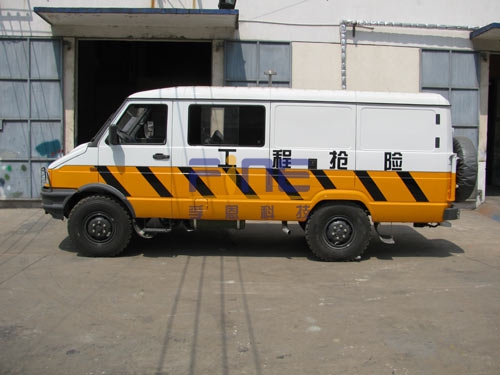
Automatic asset information management solution for mobile engineering vehicle tools based on RFID technology
I. Solution Background With social progress and the application of technological means, electrical energy has become an indispensable part of daily life. The scale of power grids continues to expand, and power applications are increasing. When a power failure occurs, it affects everything from industrial production to household life. The longer the outage, the greater the loss. Therefore, power emergency repair is critical. During the repair process, engineers may not have sufficient knowledge of tool information—tools may be damaged and scrapped but still in use, causing delays; or tools and equipment may be inadvertently lost after construction, making subsequent repairs more difficult, resulting in "penny wise, pound foolish." RFID technology
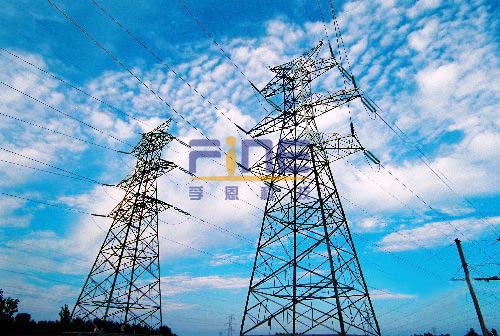
RFID-Based Full Lifecycle Management Solution for Power Grid Assets
I. Background Power grid companies have put forward specific management requirements for full lifecycle management of assets, carried out the linkage correspondence among PMS, PM, and AM data of existing assets, and incorporated the results into the 'Asset Full Lifecycle Management Integrated Platform' for indicator assessment. However, asset changes still lead to declining data quality. If new management methods are not adopted, the earlier linkage results cannot be effectively consolidated. Therefore, it is necessary to apply new technologies to asset lifecycle management, enabling timely transmission and feedback of asset change information, closely linking business at all stages with 'on-site physical objects', and forming horizontal and vertical closed loops. II.
Innovative Application of FineJoin RFID Technology in Fiber Optic Digital Transformation
Innovative Application of FineJoin RFID Technology in Fiber Optic Digital Transformation I. Core Pain Points in Fiber Optic Management Currently, fiber optic network management mainly relies on manual records, paper ledgers, or basic electronic systems. Against the backdrop of expanding resource scale and increasing operation and maintenance frequency, many efficiency and safety issues have emerged, which can be summarized into three categories: 1. Low manual operation efficiency and high error rate Patch cord management dilemma: In data centers or equipment rooms, a single cabinet may connect dozens or even hundreds of fiber optic patch cords. Manual insertion and removal require checking labels one by one, and a single operation can take 5-10 minutes. If labels are worn or fall off, problems such as misinsertion or missing insertion can occur, leading to business interruptions. Troubleshooting requires backtracking the entire link, usually taking more than 1 hour.

RFID Pork Quality Information Traceability System Solution
According to data from the China Meat Association, in 2008 the national per capita meat consumption was 54.8 kg, of which pork accounted for 34.8 kg. Pork products make up over 60% of all meat consumed, and their hygiene and quality safety directly affect public health and life safety. However, China's pig slaughtering industry still lags in technical management, and a full-chain supervision system covering pig breeding, slaughter, processing, distribution, and consumption has not yet been established, posing significant risks to pork quality safety.

RFID Pharmaceutical Anti-Counterfeiting System Solution
I. Project Background Medicines are special products, primarily used to treat and save lives. The issues of 'difficulty and high cost of seeing a doctor' are frequently mentioned in various meetings, and pharmaceutical reform has drawn much attention. The focus is on inflated drug prices. In this high-profit, forced-consumption market, counterfeit drugs are the enemy of manufacturers and also make consumers fearful when purchasing. What anti-counterfeiting methods to adopt and how to eliminate counterfeit drugs are major topics continuously discussed in the pharmaceutical industry. II. Project Goals 1) Tracking of the pharmaceutical supply process The system can record and track the operation of pharmaceutical products in real time, accurately and completely, comprehensively and efficiently strengthening management from production, transportation to sales, and providing functions such as query, statistics, and data analysis.

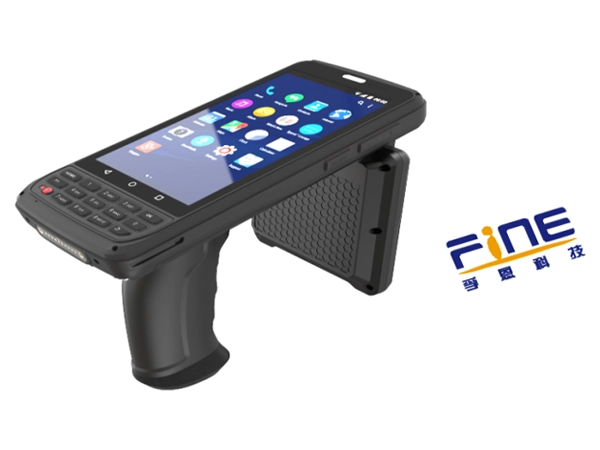
RFID Handheld Terminal Based Overall Solution for Apparel Store Applications
I. Background China is a major consumer and producer of clothing. With rapid economic development, international market integration, rising living standards, and government policy support, the apparel industry continues to grow steadily. However, industry-specific characteristics—seasonal and regional differences, market volatility, and product diversity—combined with imperfect management systems and fierce competition, bring significant challenges. The combination of styles, colors, and sizes causes the number of individual items to grow geometrically. The sales system covers direct sales, wholesale, and franchising, with numerous geographically dispersed retail stores generating large amounts of scattered data. Traditional manual data collection methods for sales, logistics, inventory, and allocation are no longer feasible. Issues such as ordering chaos, inconsistency between store and inventory data, difficult and low-accuracy warehouse counting, slow goods turnover, and financial pressure constrain enterprise development. With wireless technology advances, companies are increasingly focusing on WLAN-based solutions. As a leading IoT company, FineJoin has studied enterprise needs and combined barcode technology to launch a comprehensive apparel barcode application solution, improving computer management and enhancing management levels. Developing chain operations improves management mechanisms, efficiency, and competitiveness. Chain operations have become widespread in coastal and major cities, common in retail, catering, and service industries, and have expanded to automotive, pharmaceuticals, tobacco, home building materials, and gas stations. This solution analyzes the challenges of chain stores and provides practical solutions using equipment operations.
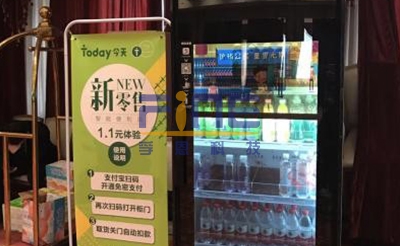
Application of RFID Technology in Unmanned New Retail
The Amazon Go unmanned store launched by Amazon in 2016, with its advanced shopping experience of 'grab and go, no queuing,' immediately attracted widespread industry attention upon release. For a time, unmanned stores became a new trend in the global retail industry.

Vehicle Management Application Solution Based on RFID Radio Frequency Identification Technology
Background This solution is a long-range intelligent vehicle management system based on RFID technology, applicable to parking lots, residential communities, bus fleets, and transport vehicle dispatch management.
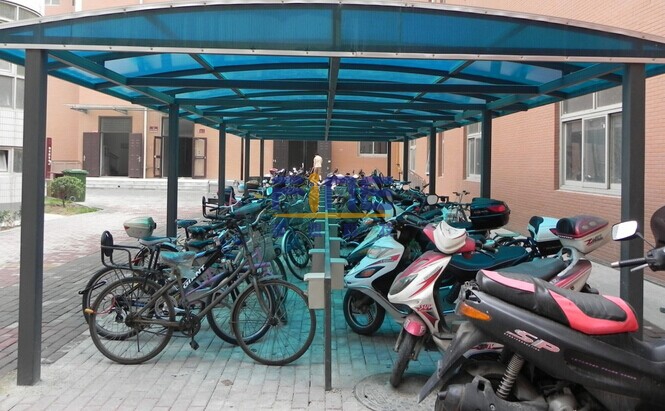
Smart Community Electric Bicycle RFID Anti-Theft Management Solution
I. Project Background In recent years, electric bicycles are everywhere on the road. Compared to bicycles, they are easier and faster; compared to cars, they offer more freedom and are more environmentally friendly, not affected by traffic jams; compared to motorcycles, they are more suitable for the general public and easier to operate. These advantages make them very popular, but theft incidents have also occurred frequently. Currently, regulations for electric bicycle management are not yet complete, and most are not registered and licensed. Once stolen, it is difficult to recover, and recovered stolen vehicles are hard to identify owners. Anti-theft management for electric bicycles urgently needs improvement. Common anti-theft devices on the market are remote-controlled anti-theft alarms with high sensitivity, alarms
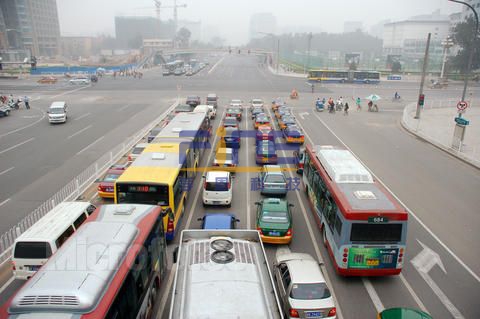
Intelligent Vehicle Positioning and Speed Measurement System Solution Based on RFID Technology
I. Project Background With economic and automotive technology development, more residents own cars, leading to severe traffic congestion that wastes time and causes frequent accidents. How to optimize road resources such as 'fully utilizing road networks, shortening vehicle travel time, reducing traffic delays, ensuring driving safety, and improving road capacity' has become a key urban issue. In addition, as enterprises expand, the number of delivery and operational vehicles increases, and managers pay increasing attention to risk control functions such as unauthorized use, overspeed control, and zone alarms.

RFID Technology: The Black Tech Hidden in Entertainment, Upgrading Your Fun
RFID Technology: The 'Black Tech' Hidden in Entertainment, Upgrading Your Fun. On weekends, when you go to theme parks, are you still annoyed by the long queues for ticket checking? Going to a water park, always worried that your phone will get wet and you won't be able to pay? Attending a music festival, wanting to interact with the stage but can't find a way? Nowadays, all these worries have been solved by an 'invisible technology' – it's RFID (Radio Frequency Identification) technology, quietly integrated into every corner of entertainment scenes, bringing convenience and surprises to you. You might be unfamiliar with the name 'RFID', but its principle is actually very simple: it uses radio frequency signals to transmit data between electronic tags, readers, and
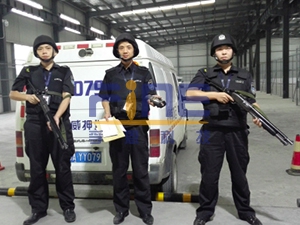
Wuhan Chutian Weibao Financial Escort System
Case Background Wuhan Chutian Weibao Financial Services Co., Ltd. was jointly established by Shenzhen Weibao Financial Escort Co., Ltd. and Wuhan Rongwei Escort Security Service Co., Ltd. with a registered capital of 10 million RMB. Its licensed businesses include tail box storage, cash sorting and counting, ATM replenishment and maintenance, cash vault custody, document imaging and storage, and other financial services. By the end of 2012, it achieved full coverage of core businesses including tail box storage, cash sorting, vault custody, and ATM maintenance. Case Introduction Through the implementation of this financial escort system